

Your gutters are probably the most overlooked part of your home until something goes spectacularly wrong. I think most homeowners don’t give them a second thought until they’re staring at water cascading down their living room wall during a storm. But here’s the thing – by then, you’re already looking at potentially thousands in repairs.
The signs are usually there long before disaster strikes. You just need to know what to look for.
Perhaps you’ve noticed a few odd things lately but brushed them off as ‘normal wear & tear’. Maybe that small crack seemed harmless, or those rust spots looked purely cosmetic. Trust me, ignoring these early warnings is like ignoring a smoke alarm because the sound’s annoying.
Water Marks Tell Stories You Don’t Want to Hear
Those brown or yellowish stains creeping down your exterior walls aren’t just unsightly – they’re basically your house crying for help. Water stains are one of the most obvious indicators that your gutter system has given up the ghost somewhere along the line.
What’s particularly frustrating is how these marks often appear in places that seem completely unrelated to your gutters. I’ve seen stains show up near ground level, metres away from where you’d expect gutter overflow to reach. But water is sneaky like that.
The science behind it is straightforward enough. When gutters can’t handle the water flow properly, the excess spills over the sides or seeps through damaged sections. This water then runs down your walls, soaking into the masonry, render, or siding. Over time, it leaves those telltale marks that scream “expensive repairs coming your way”.
Sometimes the staining appears as dark streaks running vertically down from the roofline. Other times, you’ll see discolouration spreading horizontally along the wall where water has been consistently hitting the same spot. Both patterns spell trouble.
Strange Sounds From Above
Your gutters shouldn’t sound like a percussion section during rainfall. If you’re hearing unusual noises – dripping, gurgling, or what sounds suspiciously like a small waterfall – something’s definitely amiss up there.
Normal, functioning gutters move water quietly & efficiently. They don’t announce their presence with dramatic sound effects every time it drizzles.
That constant dripping you’ve been hearing? It’s probably water escaping through a crack or joint that’s come loose. The gurgling suggests a blockage somewhere in the system, forcing water to back up & find alternative routes. And if it sounds like Niagara Falls whenever it rains, well, that’s water pouring straight over the sides because your gutters have basically thrown in the towel.
I once ignored a rhythmic dripping sound for weeks, convincing myself it was just rainwater hitting some leaves differently. Turned out to be a split joint that eventually caused water damage to the fascia board. Cost me £300 to fix what could have been sorted for £50 if I’d acted sooner.
Listen carefully during the next rainfall. Your gutters are trying to communicate with you.
Visible Damage You Can’t Unsee
Sometimes the problems are right there in plain sight, practically waving at you from the roofline.
Cracks in the gutter material might start small, but they have this annoying habit of growing. What begins as a hairline fracture can quickly develop into a gaping split, especially during freeze-thaw cycles in winter. The expanding ice doesn’t care about your budget for home repairs.
Rust spots are another red flag, particularly on older metal guttering systems. These often start as tiny orange specks that you might dismiss as surface corrosion. But rust is relentless – it eats through metal with the determination of a teenager attacking a pizza. Once it takes hold, it spreads faster than you’d expect.
Then there are the obvious structural issues. Sagging sections where the gutter has pulled away from the fascia board. Joints that have separated, leaving gaps where water pours through. Missing or damaged brackets that leave entire sections hanging precariously.
The tricky bit is that some damage isn’t visible from ground level. Sometimes you need to get up there & have a proper look, though I’d recommend getting a professional for that unless you’re comfortable with ladders.
Plants Growing Where They Shouldn’t
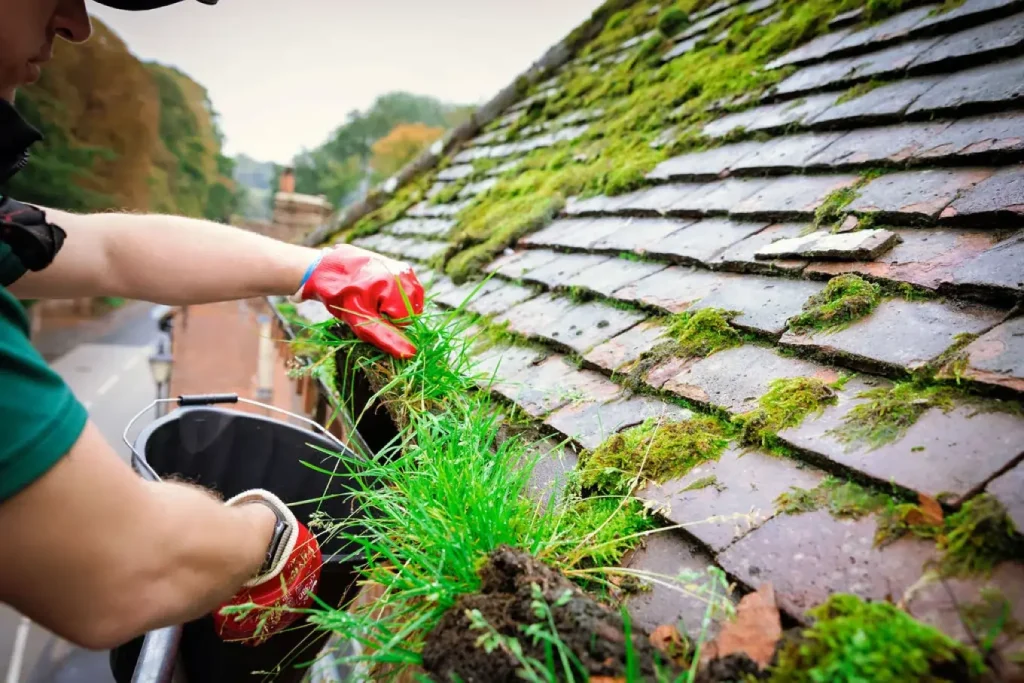
Nature has this wonderful ability to find the most inconvenient places to set up shop. If you’ve spotted vegetation growing in your gutters, congratulations – you’ve got a mini ecosystem developing at roof level.
This isn’t just a quirky garden feature. It’s a sign that debris has been accumulating for long enough that seeds have taken root & started growing. We’re talking about months or even years of neglect here.
The weight of all that organic matter – the leaves, twigs, soil, and now actual growing plants – puts enormous strain on your gutter system. The brackets weren’t designed to support what’s essentially a hanging garden. Something’s got to give, & it’s usually the fixings that fail first.
Plus, those roots can work their way into cracks & joints, widening existing damage & creating new problems. Plants are surprisingly destructive when they’re growing where they shouldn’t be. I’ve seen small saplings literally split sections of guttering apart as they grew.
If you can see greenery from ground level, the situation up there is probably worse than you think.
Foundation Problems Starting Below
Here’s something that catches people off guard – sometimes the first sign of gutter problems shows up nowhere near your gutters.
Pooling water around your foundation, erosion in your flower beds, or even basement flooding can all trace back to failing gutters. When your gutter system can’t direct water away from the house properly, gravity takes over & sends it straight down to cause mayhem at ground level.
I remember helping a neighbour figure out why their basement kept flooding during heavy rains. We spent ages checking for underground pipe problems, looking at drainage systems, even wondering if there was an underground spring we didn’t know about. Turned out their gutters had been overflowing for months, saturating the soil around the foundation until the water had nowhere to go but inside.
The repair bill for waterproofing the basement & sorting out the foundation damage ran into thousands. The gutter repair that would have prevented it all? Less than £200.
Sometimes the most expensive problems have the cheapest solutions, if you catch them early enough.
Paint Problems & Surface Damage
When gutters start failing, your home’s exterior takes a beating. Paint begins peeling or bubbling in specific areas – usually wherever water has been running down walls consistently.
This happens because constant moisture exposure breaks down paint adhesion. The surface underneath starts to deteriorate too, whether it’s wood, metal, or masonry. What started as a gutter problem quickly becomes a whole house exterior renovation project.
The damage pattern is usually pretty distinctive. You’ll see vertical strips where the paint has failed, often starting from near the roofline & working downward. Sometimes there’s also staining or discolouration that shows the water’s path down the wall.
On wooden surfaces, prolonged water exposure can lead to rot. Metal surfaces develop rust spots. Even modern materials like uPVC can suffer UV damage when the protective paint layer gets compromised by constant moisture.
I think the frustrating thing about paint damage is how it seems to happen suddenly, even though the underlying cause has been building up for ages. One day everything looks fine, the next day you’re staring at peeling paint & wondering how it got so bad so quickly.
The answer, of course, is that it didn’t happen overnight. It just reached the point where the damage became visible.
Ice Dam Formation in Winter
Winter brings its own special set of gutter nightmares, & ice dams are probably the worst of the lot.
These form when snow melts on your roof but then refreezes in the gutters, creating a barrier that prevents proper drainage. More snow melts, hits the ice barrier, & backs up under your roof tiles or shingles. Before you know it, you’ve got water inside your house coming from above.
Ice dams are particularly nasty because they can cause structural damage that isn’t immediately obvious. Water can seep into wall cavities, insulation, & ceiling spaces, creating perfect conditions for mould growth. By the time you realise what’s happened, the damage can be extensive.
The weight of ice buildup can also damage the gutters themselves, pulling them away from the fascia board or causing brackets to fail. I’ve seen entire gutter sections come crashing down under the weight of accumulated ice.
Prevention is definitely better than cure here, but it requires gutters that can handle winter conditions properly. Damaged or poorly maintained systems are sitting ducks when the temperature drops.
If you’ve had ice dam problems before, it’s almost certainly going to happen again unless you address the underlying gutter issues.
The Bottom Line
Gutters are one of those home maintenance areas where a little attention goes a long way. The signs of trouble are usually pretty clear once you know what to look for, & addressing problems early can save you from some truly expensive headaches down the line.
The thing is, most gutter problems don’t fix themselves. They just get progressively worse until they become impossible to ignore. That small crack you noticed last month? It’s bigger this month. Those rust spots? They’re spreading. The slight sag in one section? It’s pulling other parts of the system out of alignment.
Your future self will thank you for dealing with these issues now rather than waiting for a crisis. Trust me on this one – emergency repairs during a storm are neither cheap nor convenient.